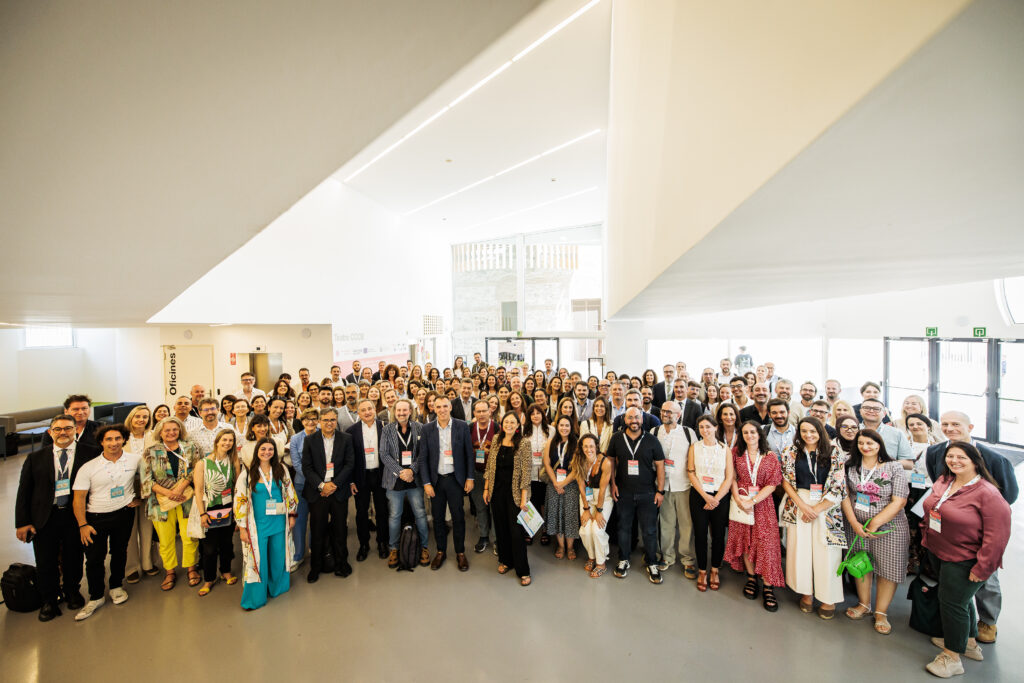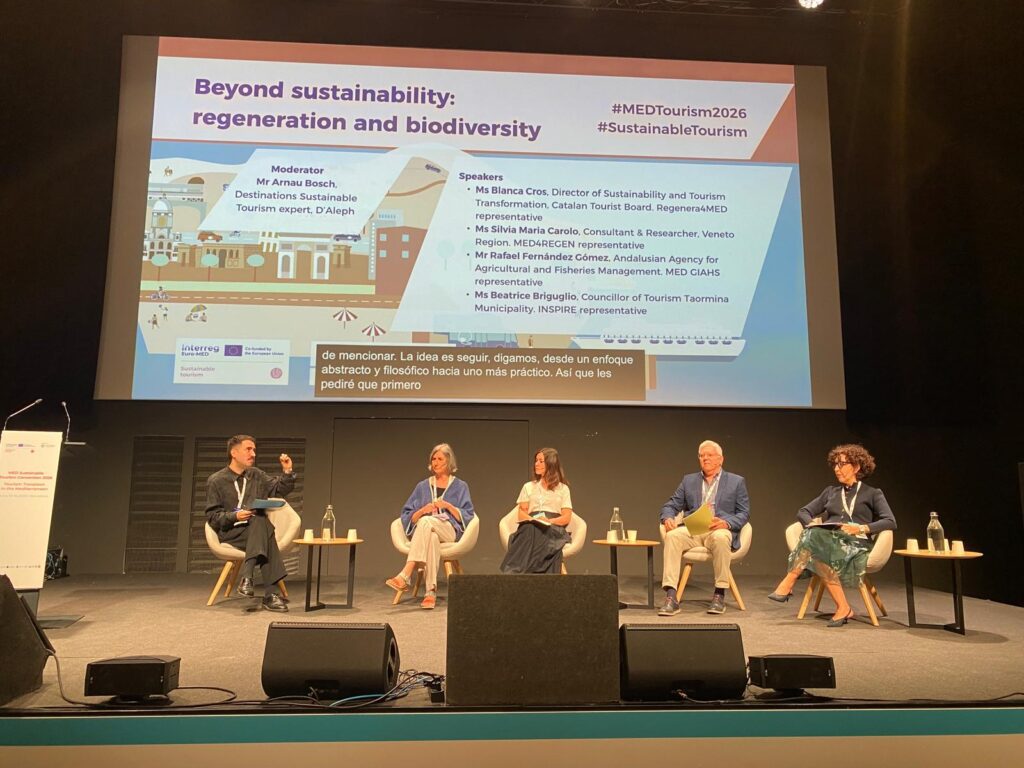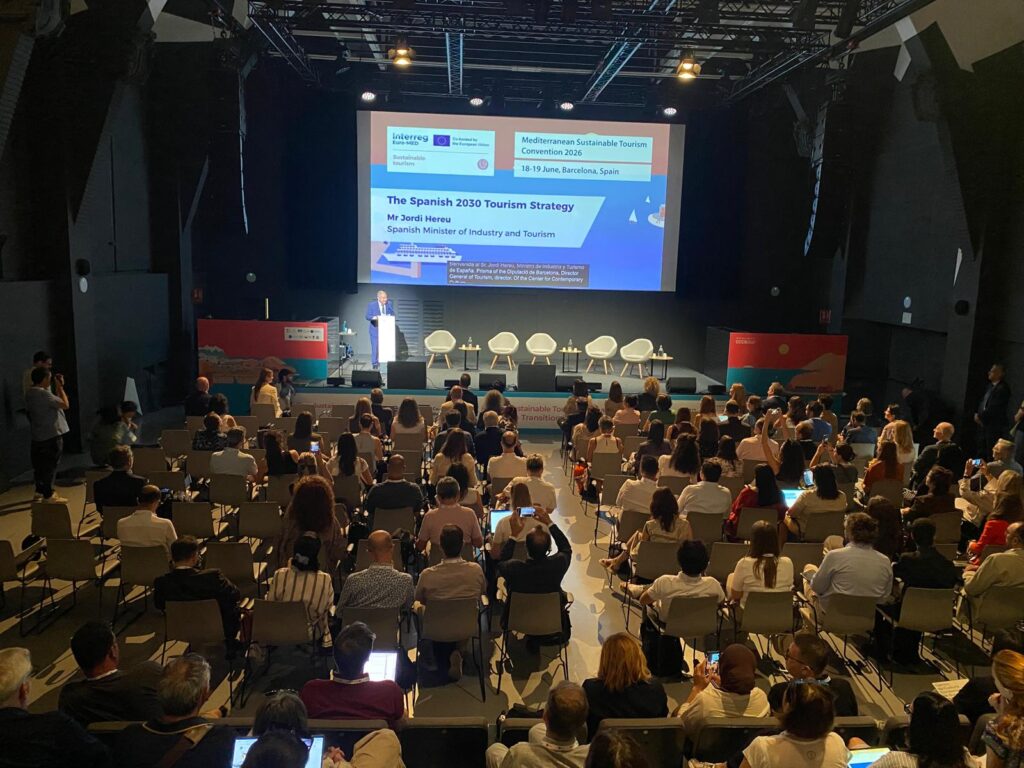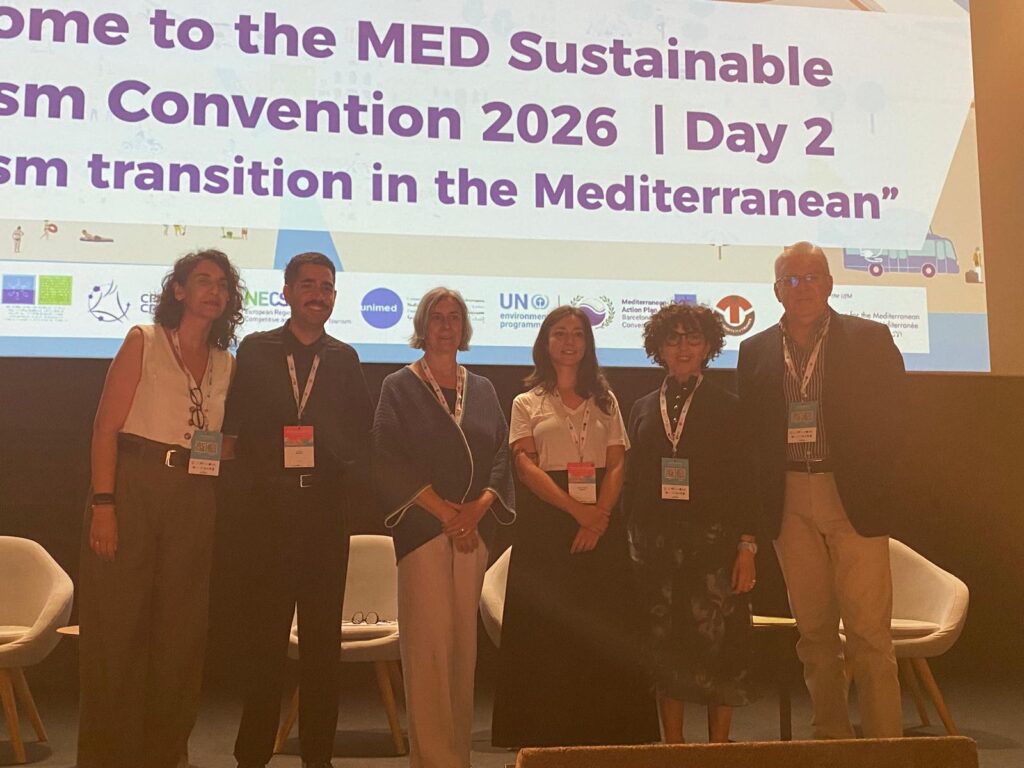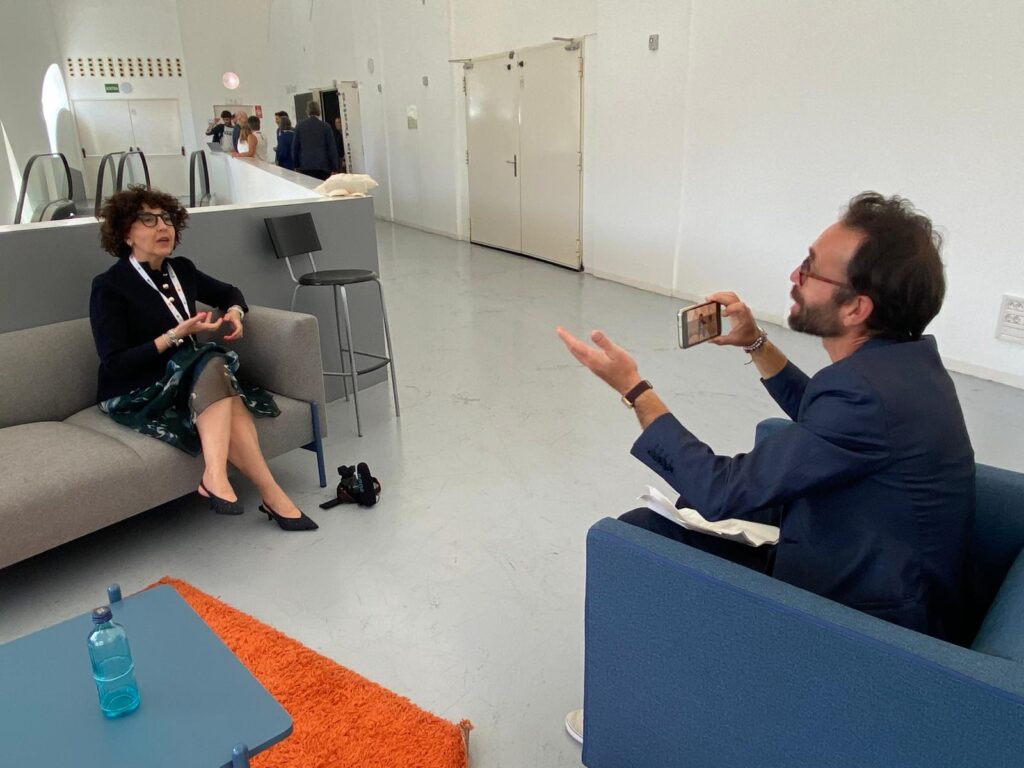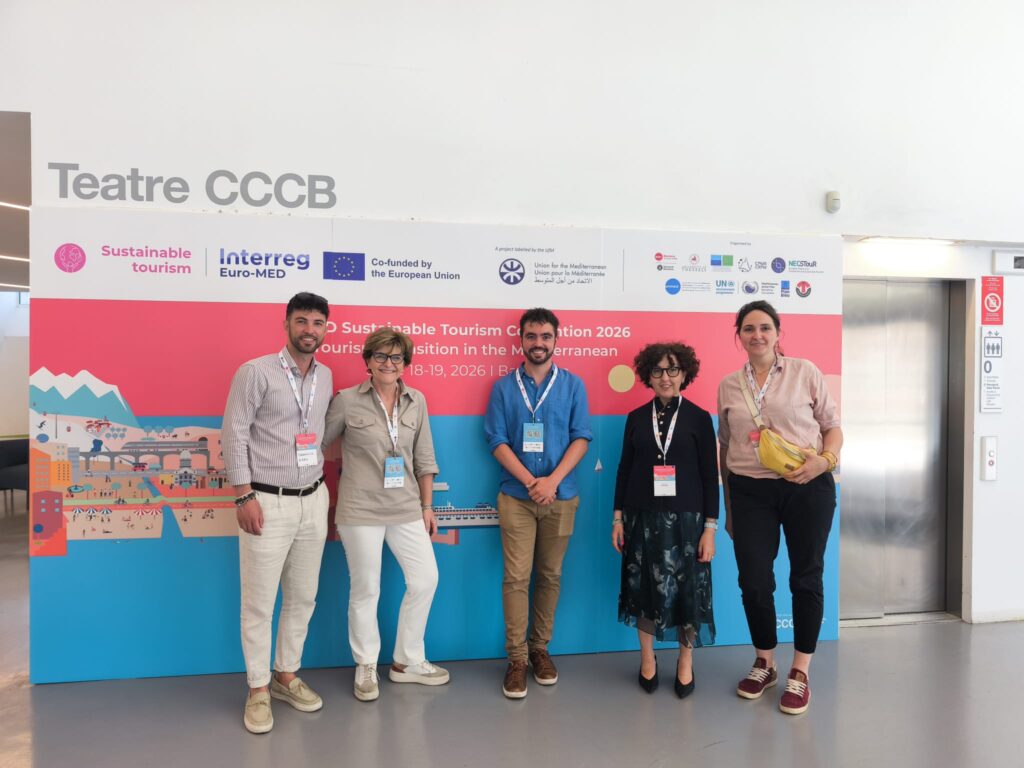

On 18 and 19 June 2026, the Centre for Contemporary Culture of Barcelona (Spain) hosted the III MED Convention on Sustainable Tourism. Representing the Municipality of Messina, Dr Beatrice Briguglio, Project Manager of the project, presented INSPIRE’s approach to the valorisation of local agrobiodiversity as a driver for more sustainable and authentic Mediterranean tourism before approximately 250 experts, policy-makers and institutional representatives from across the Mediterranean basin.
The Centre for Contemporary Culture of Barcelona (CCCB) provided the setting, on 18 and 19 June 2026, for the third edition of the MED Convention on Sustainable Tourism — the flagship event of the Mediterranean Community on Sustainable Tourism, organised by the Province of Barcelona within the European Interreg Euro-MED Programme. Centred on the theme “Tourism Transition in the Mediterranean”, the event brought together around 250 sector operators, policy-makers, researchers, academics and representatives of international organisations from across the Mediterranean basin, establishing itself as the most important platform for the exchange and capitalisation of Interreg Euro-MED projects dedicated to sustainable tourism.
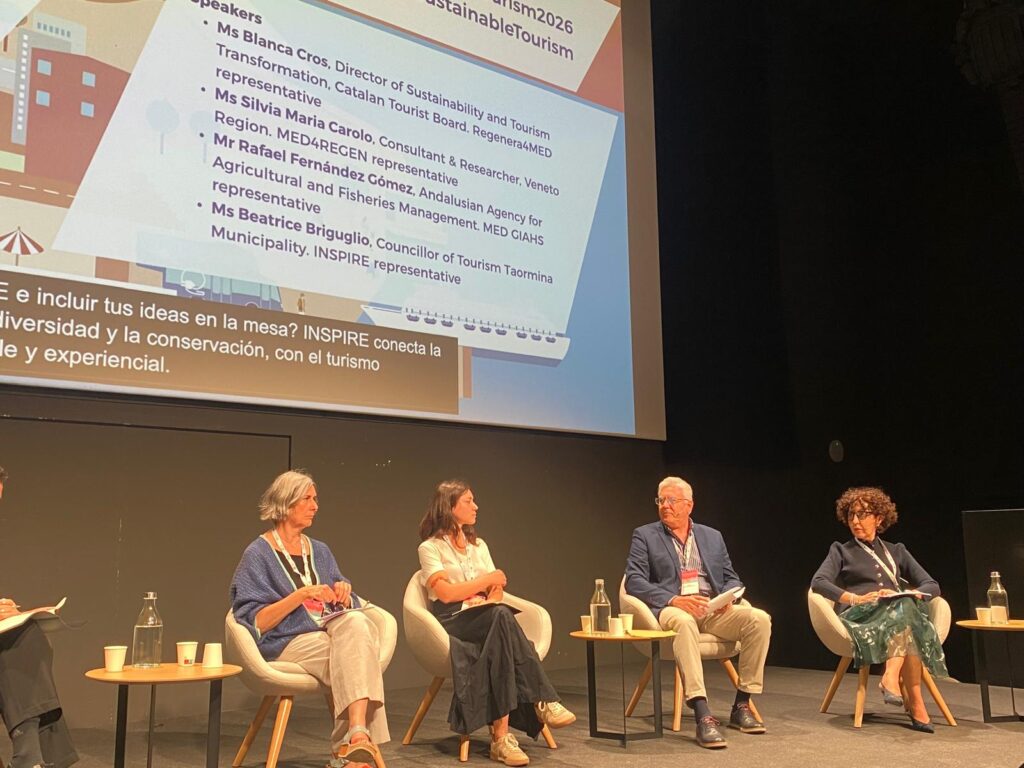
The Municipality of Messina attended in its capacity as Lead Partner of the INSPIRE project, with a delegation comprising Project Manager Dr Beatrice Briguglio and colleagues Rita Melita, Responsible Officer for the Procedure, and Francesco Rizzo, a member of the INSPIRE working group. It was Dr Briguglio who took to the stage at the CCCB to present the project during the session dedicated to solutions proposed by Interreg Euro-MED projects for the strategic management of tourism in the Mediterranean.
In her address, Briguglio highlighted the urgency of identifying alternative tourist destinations and models that respond more coherently to the principles of biodiversity and sustainability, moving beyond the logic of mass tourism and the concentration of visitor flows in the Mediterranean’s most over-exploited destinations. She emphasised how rural territories, with their extraordinary heritage of agrobiodiversity — local varieties, traditional knowledge, and historic agricultural landscapes — represent a still largely untapped resource, capable of generating authentic forms of tourism rooted in local communities and respectful of socio-ecological balances.
Briguglio then announced the launch of the local Living Labs within the INSPIRE project: territorial co-design laboratories, which represent the methodological cornerstone of the INSPIRE project, in which farmers, tourism operators, associations and local institutions will work together to transform the agrobiodiversity heritage into tangible, marketable tourism experiences.
The presence of the Municipality of Messina in Barcelona carries a significance that goes beyond mere participation in a networking event. In a landscape where Italian representation in transnational Euro-Mediterranean cooperation projects on sustainable tourism remains limited, Messina stands out as the only municipality in Southern Italy to hold the role of lead partner in an Interreg Euro-MED project dedicated to the sector, bringing to the European table a southern and Mediterranean perspective that enriches the debate with experiences and territories too often absent from international cooperation agendas.
INSPIRE was also explicitly cited in the summary slide of complementary solutions for the strategic management of tourism presented by projects within the thematic community, where it featured as “Community-based model for local agrobiodiversity” alongside other Interreg Euro-MED projects — a further recognition of the value and relevance of its approach within the programme’s framework.
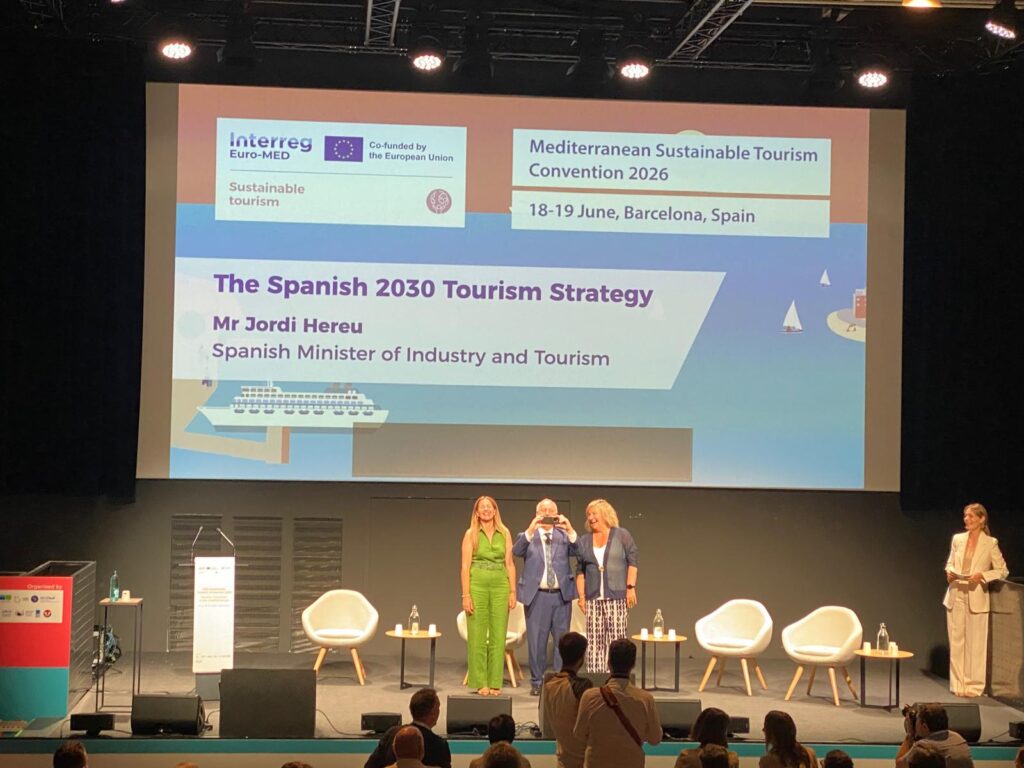
The Convention opened with an inaugural session of considerable institutional weight. Among the speakers were Dr Judit Carrera, Director of the Centre for Contemporary Culture of Barcelona; Dr Soledad Bravo, head of the Tourism Department of the Province of Barcelona; and Curzio Cervelli, Coordinator of the Joint Secretariat of the Interreg Euro-MED Programme, who leads the management team for transnational cooperation projects in the Mediterranean. On the second day, Spanish Minister for Industry and Tourism Jordi Hereu also took part, presenting Spain’s Tourism Strategy to 2030 and stressing the need for policies that balance the sector’s competitiveness with ecological transition and territorial cohesion.
The intellectual thread running through both days was provided by the keynote speech of Prof. Claudio Milano, a researcher at the University of Barcelona, who offered a critical and systematic reading of the paradoxes of “sustainability” as applied to tourism, analysing six key areas for rethinking the tourism transition from a political ecology perspective: from green capitalism to colonial extractivism, from the degrowth/green growth debate to ecological debt, through to ecofeminist critique and the question of transition justice — with the warning that we must ask “who decides the transition and who is left out of it.”
Among the most debated themes in the thematic sessions, several stood out strongly: the Mediterranean water crisis, in which tourism is among the largest consumers of water in regions already under drought stress; the phenomenon of rural gentrification, with the case study of Apulian masserie converted into luxury facilities without inclusive governance mechanisms; deseasoning strategies, with the example of the Balearic Islands and their sustainable tourism tax; and the risk of greenwashing in the cruise sector. On the governance front, consultations conducted within the programme between May and September 2025 identified seven priority signals for the sector: unbalanced tourism, skills shortages, administrative simplification, environmental and economic sustainability, multimodal connectivity, digitalisation and shared branding.
Against this backdrop, the Convention acknowledged that the Strategy for the tourism of tomorrow requires a three-pronged convergent approach: strengthening governance, balancing sustainability and competitiveness, and integrating tourism into sectoral policies. A message that resonates directly with INSPIRE’s vision: only by ensuring that tools and strategies developed through European projects are embedded in planning documents and local and regional public policies will it be possible to move from pilot phases to a real and lasting impact on territories.
#ProjectINSPIRE #SustainableTourism #Agrobiodiversity #Mediterranean